
In November 2020, in the middle of restoring an 1889 brownstone at 215 South 9th Street, the crew at Oakland’s on 9th did something that felt more like demolition than preservation: they tore up the parking lot behind the building.
The note posted that week was short. “Tearing up the parking lot. Big job ahead.” What nobody expected was that the asphalt had been acting as a lid on a hundred and thirty years of the building’s life, and that pulling it off would turn up a small archaeology of downtown Minneapolis.
Why tear up a perfectly good parking lot?
The short answer is that it was not a perfectly good parking lot. It was a sheet of asphalt poured over caved-in window wells, an old service yard and whatever the previous century had left behind, and it ran right up to the foundation of a building we were trying to keep dry.
The longer answer is that we wanted less of it. The plan was to break up the paving, pour low concrete curbs, and turn those curbs into containers for trees and shrubs — “little pieces of greenspace in the sea of parking lots and asphalt,” as the crew put it at the time. Anyone who has stood on a downtown lot in July understands the appeal; the EPA’s work on urban heat islands puts a number on what your feet already know about dark pavement in a dense city.

A toy police badge, under the asphalt, barely rusted
On November 12, Michael turned up a small metal badge in the excavation. Cast in pot metal, eagle on top, and stamped, plainly, JUNIOR POLICE. It came out of the ground remarkably unrusted — sealed under asphalt, it had been kept away from air and water for decades.
There is no way to date it precisely and we are not going to pretend otherwise. Toy junior-police badges like it were given out by police departments, cereal companies and radio serials across a long stretch of the twentieth century. What we can say is that a child was in that yard, lost a badge, and never found it — and that a parking lot then sat on top of the moment for the better part of a lifetime.
Bricks from the original 1889 construction
The next day, Will found bricks. They had come from the building’s original construction and had been used in the window wells along the foundation — wells that had caved in years earlier and been paved over. He pulled them out, poured a small concrete pad in front of one of the doors, and set the salvaged brick as a border around it.
It is a very small piece of work and it is our favourite thing in the yard. As the crew noted at the time: our ancestors would find it very funny what we consider treasures in this project.
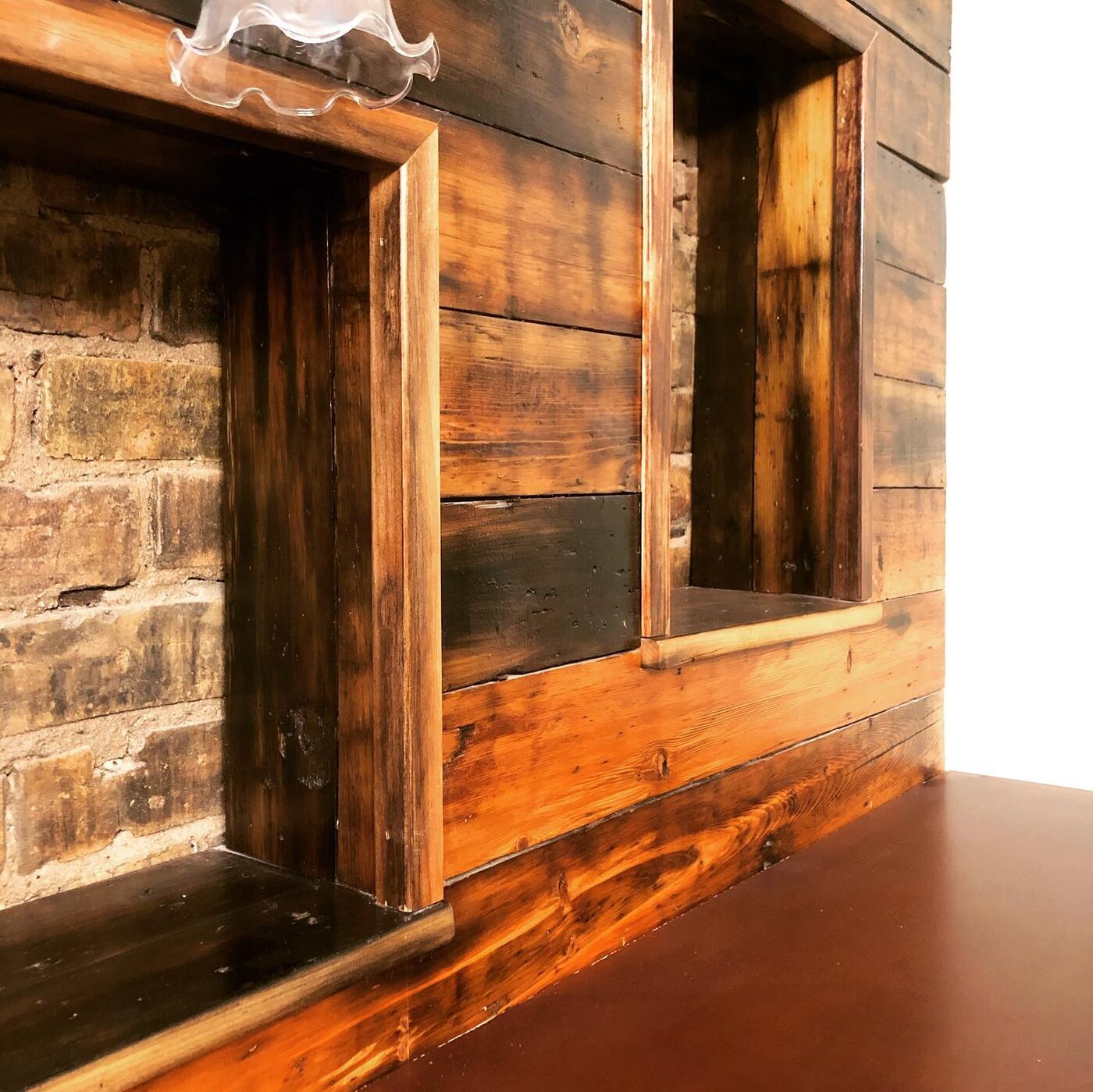
Clinkers: the downtown that ran on coal
The strangest find was the least valuable. Scattered through the fill were clinkers — lumps of coal that never fully burned in the firebox of the old boiler and fused into hard, glassy chunks. Someone had simply thrown them out into the yard, over and over, for years.
That is the detail that tells you the most about the neighbourhood this building grew up in. Every house, every hotel, every mill in downtown Minneapolis burned coal, and every one of them had the same problem: what to do with the ash and the clinker afterwards. The answer, frequently, was the back lot. If you want the rest of that story, we wrote about how an 1889 building gets modern heat, air conditioning and fibre internet — the coal room is still there, and it now holds the internet.
What the yard tells you about the building
Oakland’s on 9th was designed by Harry Wild Jones, the Minneapolis architect who also gave the city the Lakewood Cemetery Memorial Chapel and, for himself, the castle-like house on Nicollet that the city lists as the Jones House landmark. Buildings by architects of that stature usually get their history told through the front elevation. Ours keeps a good deal of it out back.
The excavation is also a decent illustration of what restoring a building like this actually involves — not just the visible work, but the 1883 brick sewer under 9th Street and everything else the previous century buried. The City of Minneapolis keeps a useful overview of preservation and landmarks if you are curious how this work is regulated here.
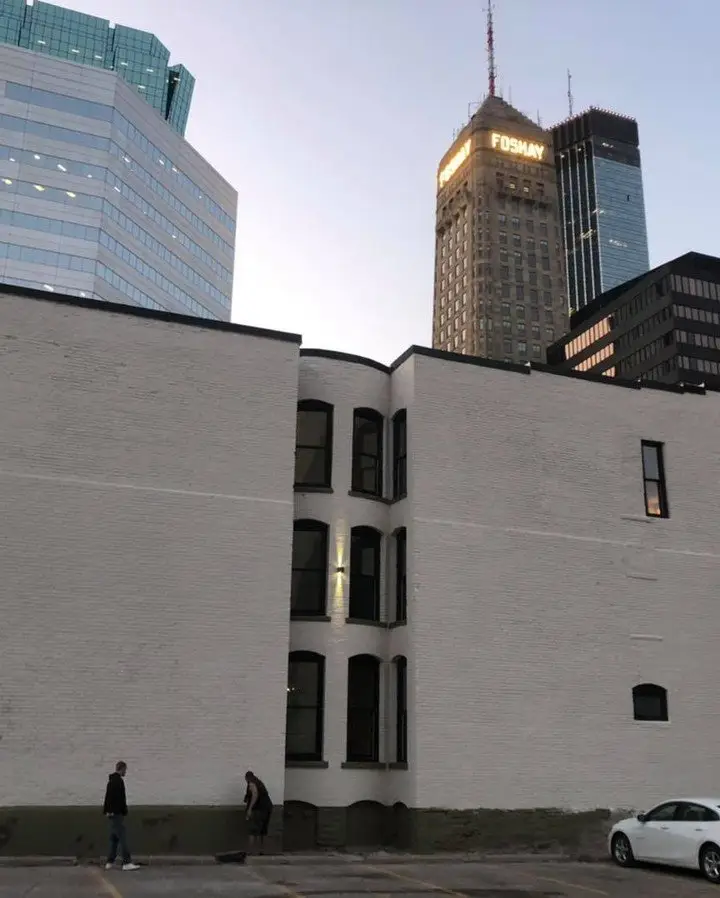
Come stay in it
Oakland’s on 9th is a furnished, month-to-month studio apartment hotel in downtown Minneapolis — a night, a week or a month, with no contract. Every studio has a full kitchen, and WiFi, heat, all utilities and laundry are included. Some units are pet friendly. We are a block from the skyway (a block — we are not connected to it), an easy walk to Target on Nicollet Mall, the Armory, Target Center and Orchestra Hall, and close to HCMC and the University of Minnesota Medical Center.
The parking lot out back is now partly trees. The bricks are in the pad by the door. The badge is safe indoors. Check availability and book a studio, or call us at (612) 314-5124 and ask about the clinkers — someone here will happily show you one.
Keep reading: What Does a Furnished Month-to-Month Studio in Downtown Minneapolis Actually Cost?