
If you have never lived in downtown Minneapolis, the skyway takes some explaining. Guests settling into a furnished studio at Oaklands on 9th usually ask about it in the first week: what exactly is it, how do you get in, and can you really cross downtown in February without a coat? Here is the practical version — the history, the hours nobody warns you about, and the entrances closest to our front door.
Nine Miles of Second-Floor Sidewalk
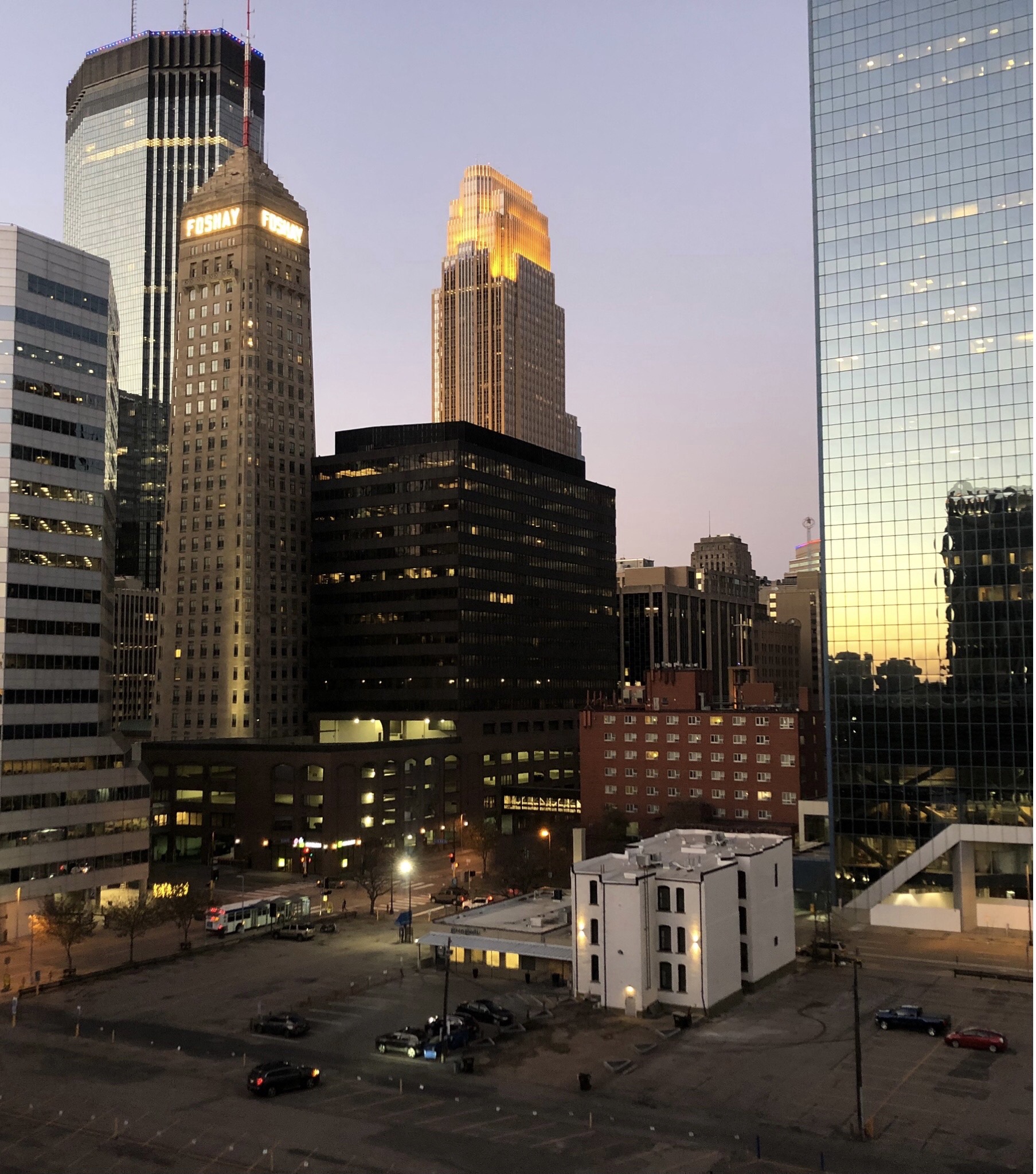
The Minneapolis Skyway System is the largest contiguous network of enclosed, second-level pedestrian bridges in the world. Meet Minneapolis counts around 80 city blocks linked together, and SkywayAccess.com, which helps coordinate skyway operations for the buildings themselves, puts the cumulative length at more than ten miles across more than 150 buildings. It runs from Target Center in the west to U.S. Bank Stadium in the east, with the Minneapolis Convention Center anchoring the south end.
A detail most people get wrong: it was not built to beat the winter. According to the Hennepin History Museum, the idea was floated in 1959 to pull pedestrians off crowded streets and let automobile traffic move more freely — staying out of the cold was a happy side effect. The first bridge went up in 1962 and was demolished in the 1980s. The oldest one still standing opened in 1963 over Seventh Street, connecting the Northstar Center and the Roanoke Building. When the IDS Tower arrived in the early 1970s with skyways running in all four directions, a scattered handful of bridges finally became a network — which is why the IDS Crystal Court still feels like the middle of everything.
Every Building Sets Its Own Hours
This is the part that catches people out. Each skyway is owned by the buildings it connects, so there is no single citywide schedule. As a rule, most skyway-connected buildings are open until about 6 p.m. Monday through Friday, and many are closed on weekends. Some open as early as 6 a.m.; some are tenant-only after hours.
If you are planning an evening walk, look up the specific building first — SkywayAccess.com keeps a searchable, building-by-building list of current skyway hours. Two more things worth knowing: many downtown elevators have an “SK” button where you would expect a “2,” and free public restrooms on the skyway level are genuinely rare.
Getting In From 9th Street
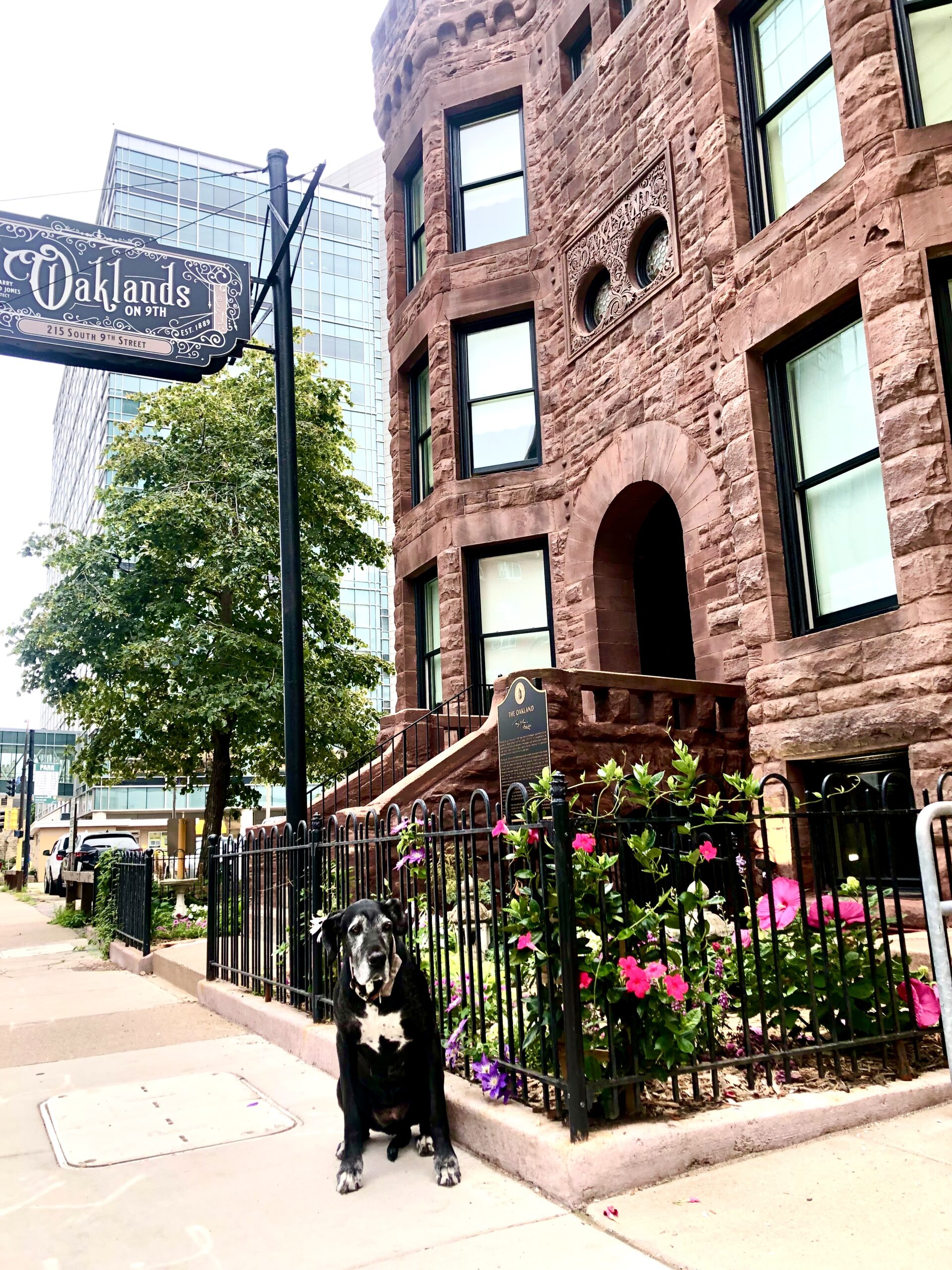
Oaklands on 9th sits at 215 South 9th Street in an 1889 brownstone. The building itself is not skyway-connected, but you are a short walk from two of downtown’s busiest entry points. The two-level Target at 900 Nicollet Mall, right at 9th Street, is on the system and doubles as the neighborhood grocery store. Just up Nicollet, the U.S. Bank Building between 8th and 9th is another main door in.
Once you are up there, the system is more useful than visitors expect: offices, pharmacies, banks, gyms, dry cleaners, salons, and dozens of lunch counters. Brothers Deli, Green + The Grain, Kadai Indian Kitchen and Roti are skyway-level regulars, and ground-floor rooms like the Dakota Jazz Club and Manny’s are reachable without stepping outside. If you would rather stay at street level, our guides to buying groceries downtown and getting around without a car cover the walk-and-transit version.
Event Nights: When the Skyway Stays Open Late
Here is the tip that actually changes plans. For major events, a designated skyway route stays open before, during and after — well past the usual 6 p.m. lockup — and the dates are posted in advance on the Target Center route page and the U.S. Bank Stadium route page.
A few coming up. These are minimum hours and can change, so check close to your date:
- Thursday, August 6 — Lynx vs. Los Angeles Sparks, 4 p.m. to midnight
- Saturday, August 8 — Lynx vs. Las Vegas Aces, 9 a.m. to 4 p.m.
- Sunday, August 9 — Lynx vs. Dallas Wings, 11:30 a.m. to 6:30 p.m.
- Saturday, August 15 — Ed Sheeran at U.S. Bank Stadium, 2 p.m. to 1 a.m.
- Tuesday, August 18 — J. Cole at Target Center, 4 p.m. to midnight
- Saturday, August 22 — Vikings vs. Baltimore Ravens (preseason), 9 a.m. to 6 p.m.
- Friday, August 28 — Tame Impala at Target Center, 4 p.m. to midnight
- Sunday, September 13 — Vikings vs. Green Bay Packers, noon to 9 p.m.
We have written up Target Center’s August lineup and the Vikings home dates in more detail if you are building a stay around one of them.
Settling In for a Month or a Night
Every studio here is fully furnished with a full kitchen, and WiFi, all utilities, heat and laundry are included — no contract, whether you stay a night, a week or a month. If family joins you mid-stay, our sister property 300 Clifton is a historic mansion bed and breakfast near Loring Park, the Pillsbury Club is another Minneapolis mansion under careful restoration, and Minneapolis Trolley Tours is a good way to see the city at street level once you have mastered the second floor.
Ready to settle in? Check availability and book a studio, or call us at (612) 314-5124 — we are happy to point you to the nearest skyway door.
Keep reading: planning a fall visit? See our roundup of things to do in downtown Minneapolis in September 2026 — Twins and Vikings home games, Target Center concerts, Broadway at the Orpheum and Orchestra Hall’s season opener, all within walking distance.