
Guests at Oaklands on 9th often ask the same question: who built this place? It’s a fair thing to wonder about an 1889 brownstone that has outlived nearly every building of its generation in downtown Minneapolis. The honest answer is that no single person did. Over 137 years, the Oaklands has been built, reinvented, nearly lost, and brought back — and every chapter has a name attached to it.
Here are the people behind the building at 215 South 9th Street, from the contractor who pulled the original permit to the craftsman who restored all 65 of its windows.
W.P. Burnett, the builder who lived next door
The Oaklands has an official birthday. On June 20, 1889, owner W.P. Burnett took out a building permit for a three-story brick apartment house with a brownstone front, to be built at a cost of $20,000 — and expected to be finished by September 20 of that same year.
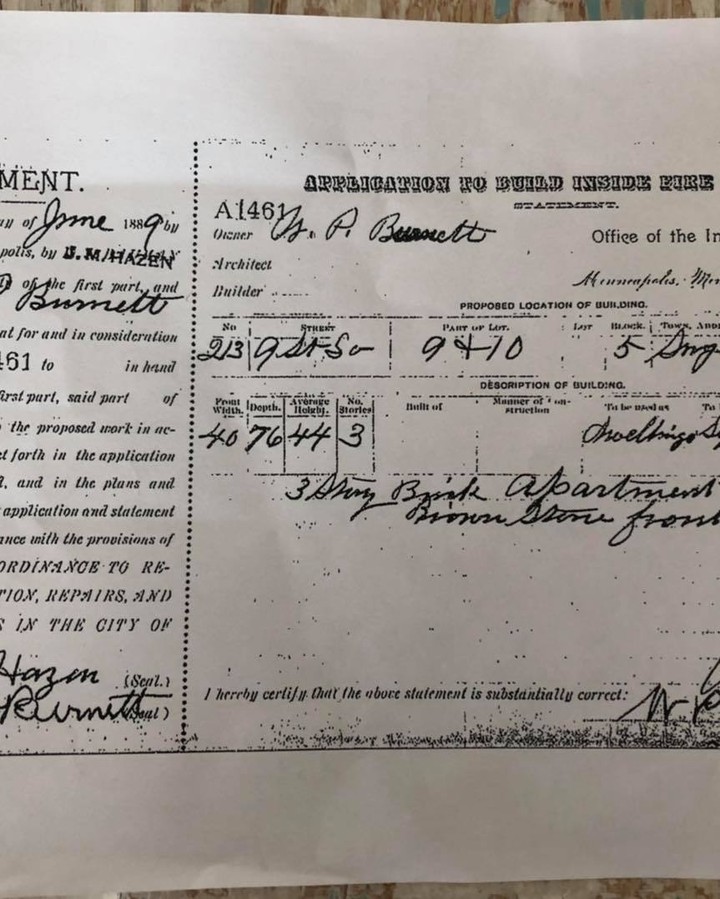
Research by archivist and genealogist Kathleen Bell turned up a detail we love: Burnett, the original owner and builder, lived right next door on South 9th Street. He wasn’t a distant developer — the Oaklands rose beside his own home, on a block he walked every day.
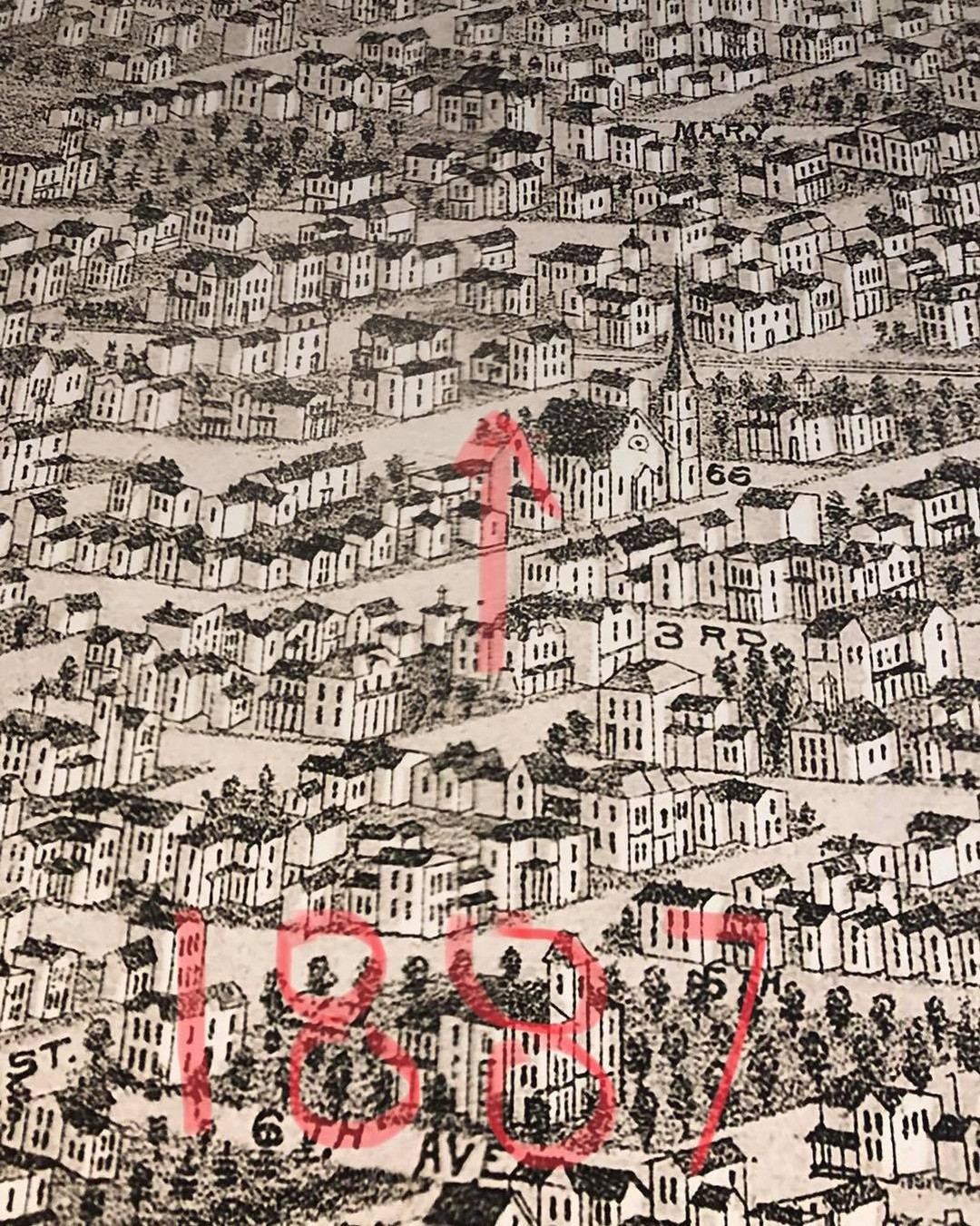
Harry Wild Jones, the underappreciated architect
The building’s design is credited to Harry Wild Jones, one of Minneapolis’s most talented architects — the same man behind the Memorial Chapel at Lakewood Cemetery. His papers now live in the Harry W. Jones collection at the University of Minnesota. The Oaklands is one of his earlier downtown works, and we’d argue one of his most underappreciated.
Jones is still a presence in the building today. Liz Vandam — the leading Harry Wild Jones historian, who quite literally wrote the book on him — designed the history wall that runs down our main hallways as a tribute to the architect and the building’s long story. Look closely when you arrive and you’ll even find his signature worked into the entry mat.
Erwin Sego and the building’s middle life
The Oaklands opened as luxury apartments, but that first chapter was short. As the streetcar system consolidated and boomed, families could suddenly live far from the core and ride in — and downtown luxury-apartment living faded. In short order, the Oaklands became the Delta Hotel. (If streetcar-era Minneapolis history is your thing, our friends at Minneapolis Trolley Tours tell that story from an actual trolley.)
In 1960, owner Erwin Sego pulled the building’s next big permit, converting the hotel into 18 apartments and 6 sleeping rooms at a cost of $10,000. The layout you stay in today still traces back to that conversion — which is part of why our studios feel like real apartments rather than hotel rooms.
Lisa Goodman, Will, and the crew who brought it back
A 2016 fire left the building a burned-out shell, and for three winters it sat abandoned with no roof, rated the most endangered building in Minnesota. Demolition was the expected ending. It didn’t happen — thanks to prioritization by the City, a determined grassroots movement, and City Council Member Lisa Goodman, who is credited with saving both the Oaklands and 300 Clifton, our sister mansion B&B, from the wrecking ball. The building now stands among the city’s designated Minneapolis landmarks.
Then came the rebuilders. Beginning in spring 2019 — only the third renovation in the building’s 130-year history — project architect Mina Adsit and a small, devoted crew put the Oaklands back together. A craftsman named Will worked on all 65 windows start to finish over a year and a half, restoring the brick molding and sills as he went. The masonry crew mixed their own traditional lime mortar, the same type used in 1889, and worked through more than 4,000 pounds of it tuck-pointing the brick — at night, to stay out of the neighbors’ way.
Stay inside their story
The best part of all this history is that you don’t view it from behind a rope. You live in it. Every studio at Oaklands on 9th is fully furnished with a full kitchen, WiFi, all utilities, and free laundry — stay a night, a week, or month to month, no contracts. You can read more about the history you can see during your stay and how an 1889 building got modern heat, AC, and fiber internet.
Ready to sleep in a building that Burnett built, Jones designed, and a whole city helped save? Book your studio here or call us at (612) 314-5124 — we’d love to show you the history wall in person.
Keep reading: if you’re headed to Minneapolis this fall — for school, work, or a fresh start — see our guide to temporary housing near the University of Minnesota for fall semester 2026.